
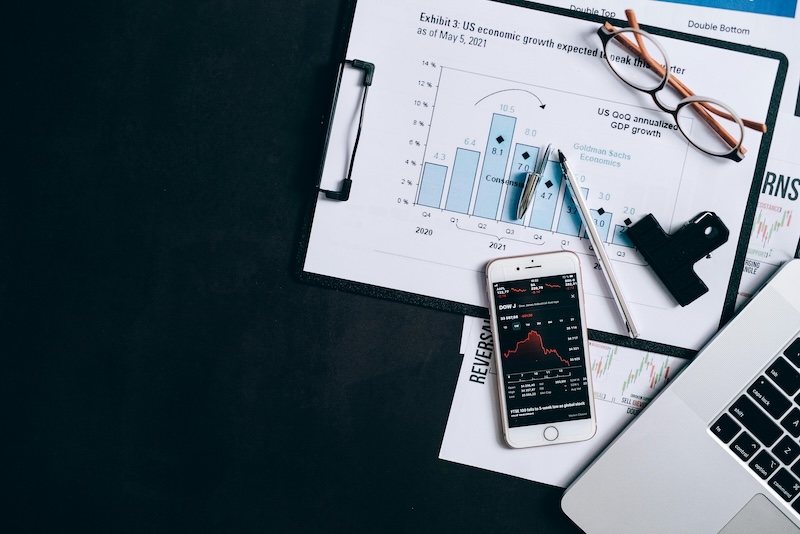
Economies change every day. Interest rates move, stock markets react, governments adjust policies, and consumer confidence rises or falls. Headlines shift fast, but beneath the noise, the same foundational economic forces continue to shape business decisions, investment strategies, and long-term market outcomes.
Understanding these enduring principles of economics is valuable not only for investors and executives, but for anyone trying to make better financial decisions. Whether you are running a company, managing household finances, or evaluating market opportunities, the same economic fundamentals apply.
The most successful decision-makers do not simply react to short-term events. They understand the deeper systems driving supply, demand, inflation, productivity, labor, and capital. These forces remain relevant across industries, countries, and decades.
This article explores the timeless economic principles that continue to influence global markets and why understanding them creates a long-term advantage.
Supply and Demand: The Core Engine of Every Economy
At the center of economics is one simple idea: supply and demand.
When demand for a product, service, or asset increases while supply remains limited, prices rise. When supply exceeds demand, prices tend to fall. This principle applies everywhere—from housing markets and oil prices to labor markets and technology stocks.
Businesses constantly make decisions based on this balance. If demand for electric vehicles rises faster than manufacturers can produce batteries, prices and investment opportunities increase. If too many companies enter the same market with similar products, competition intensifies and margins shrink.
This is why market timing often depends less on headlines and more on understanding where supply constraints and demand shifts are occurring.
Companies that identify these imbalances early often gain the greatest advantage.
Inflation: Why Purchasing Power Matters
Inflation is one of the most discussed economic topics because it affects nearly everything.
At its core, inflation measures how quickly prices rise over time. When inflation increases, purchasing power declines. The same amount of money buys fewer goods and services.
For consumers, this affects daily life—housing, food, transportation, and healthcare all become more expensive. For businesses, inflation raises operating costs, changes pricing strategies, and influences hiring decisions.
Central banks, such as the Federal Reserve, monitor inflation closely because controlling price stability is essential for long-term economic health.
Too little inflation may signal weak demand and slow growth. Too much inflation creates instability and uncertainty.
This balance is one of the most important relationships in the economy because it directly influences interest rates, investment decisions, and consumer confidence.
Interest Rates: The Cost of Money
Interest rates determine how expensive it is to borrow money.
When rates are low, businesses can invest more easily, consumers are more likely to buy homes or finance purchases, and economic activity tends to accelerate.
When rates rise, borrowing becomes more expensive. Companies may delay expansion, investors reassess valuations, and households reduce discretionary spending.
This is why interest rate policy has such broad consequences across the economy.
Higher rates can cool inflation, but they can also slow growth. Lower rates can stimulate growth, but they may also increase financial risk if borrowing becomes excessive.
Understanding this tradeoff helps explain why markets often react so strongly to central bank announcements.
The price of money influences nearly every other economic decision.
Productivity: The Hidden Driver of Long-Term Growth
Short-term market moves attract attention, but productivity drives real long-term prosperity.
Productivity refers to how efficiently labor and capital produce output. When businesses can produce more with the same resources, economies grow stronger without necessarily increasing costs.
Technological innovation is one of the greatest drivers of productivity. Automation, software, artificial intelligence, and improved logistics systems all allow businesses to scale faster and operate more efficiently.
Historically, major economic expansions have often followed major productivity breakthroughs—from industrial manufacturing to the internet economy.
This is why innovation matters beyond the technology sector. Productivity improvements raise wages, improve living standards, and strengthen national competitiveness.
Sustainable economic growth depends more on productivity than on short-term stimulus.
Labor Markets and Consumer Strength
Consumers drive a large portion of economic activity, and labor markets determine how strong that engine remains.
Employment levels, wage growth, workforce participation, and job security all influence spending behavior. When employment is strong and wages rise, consumer demand tends to remain healthy.
When labor markets weaken, spending slows, business revenues decline, and economic momentum can fade quickly.
This relationship is especially important because consumer spending supports industries ranging from retail and travel to housing and financial services.
Businesses that closely monitor labor market conditions often make better forecasting decisions than those focused only on quarterly earnings reports.
The strength of the workforce often predicts the strength of the broader economy.
Confidence and Expectations Shape Reality
Economics is not purely mathematical. Human behavior matters.
Consumer confidence, investor sentiment, and business expectations can accelerate or slow economic activity before actual numbers change.
If businesses believe a recession is coming, they may reduce hiring and delay expansion. If consumers fear financial instability, they may save more and spend less. These decisions themselves can contribute to slower growth.
Likewise, optimism can drive investment, hiring, and expansion.
This psychological component explains why markets often move before economic reports confirm a trend.
Expectations shape outcomes.
Understanding sentiment is often just as important as understanding balance sheets.
Government Policy and Market Incentives
Tax policy, regulation, fiscal spending, and trade decisions all influence economic outcomes.
Governments shape incentives. They can encourage business investment through tax advantages, support strategic industries through infrastructure spending, or reduce inflationary pressure through tighter monetary coordination.
At the same time, excessive regulation or policy uncertainty can discourage capital investment and slow growth.
Markets respond not just to what governments do, but to how predictable those actions are.
Businesses value stability because planning requires confidence.
Whether analyzing energy markets, real estate, manufacturing, or global trade, policy remains one of the most powerful economic variables.
Global Interconnection Changes Local Outcomes
Modern economies are deeply interconnected.
A supply chain disruption in Asia can affect manufacturing costs in North America. Energy prices in Europe can influence inflation expectations globally. Currency fluctuations can reshape international competitiveness overnight.
This is why economic analysis can no longer remain local.
Businesses must understand global trade flows, geopolitical risk, shipping infrastructure, and foreign demand patterns. Investors must think beyond domestic markets.
The economy is increasingly a network, not a series of isolated national systems.
Global awareness is now a basic requirement for strategic decision-making.
Why Economic Fundamentals Always Matter
Markets evolve. Industries change. New technologies emerge.
But the foundational forces of economics remain remarkably consistent.
Supply and demand, inflation, productivity, labor, confidence, and incentives continue to shape outcomes regardless of whether the focus is manufacturing, artificial intelligence, real estate, or financial markets.
This is why long-term thinkers outperform short-term reactors.
They understand that while headlines change daily, the underlying economic rules rarely do.
Strong businesses are built on economic discipline. Strong investment decisions are grounded in economic logic. Strong leadership depends on understanding both numbers and human behavior.
The economy is not just a subject for analysts or policymakers—it is the operating system behind nearly every major decision.
Those who understand it do not simply respond to change.
They anticipate it.
Final Thoughts
The most valuable economic knowledge is rarely the newest trend. It is the understanding of principles that continue to work across decades.
In a world dominated by constant news cycles and short-term volatility, timeless economic thinking provides clarity.
The best leaders, investors, and operators focus less on temporary noise and more on enduring forces.
Because while markets may change direction quickly, the laws of economics remain constant.
And those who master them position themselves to make better decisions for years to come.