
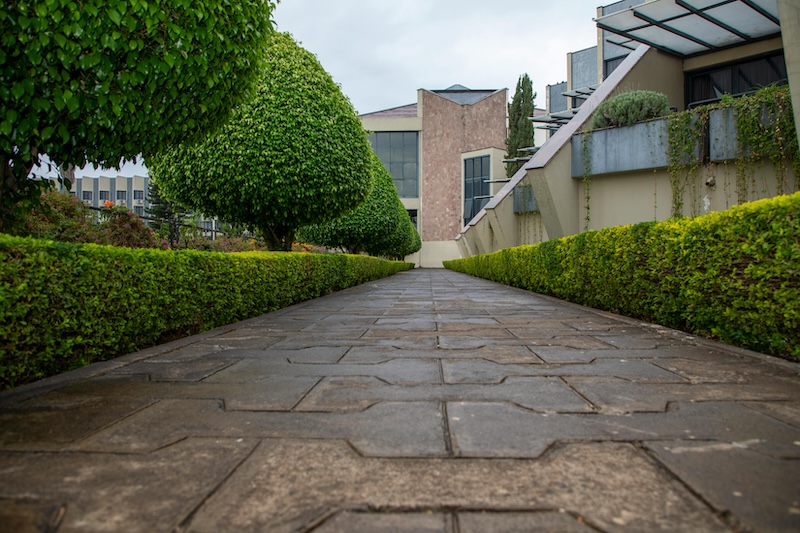
Homeownership is one of the most significant financial decisions most people will ever make — and yet billions of dollars in property value are left on the table every year because owners overlook the single most visible asset they control: their land.
Landscaping is no longer a luxury reserved for estate properties or suburban showcase homes. It is, increasingly, a recognized driver of measurable financial return. Done right, it enhances your property’s market value, lowers long-term maintenance costs, reduces energy expenses, and accelerates sale timelines. Done wrong — or ignored entirely — it quietly erodes the value of everything behind your front door.
This guide cuts through the aesthetics and gets to what matters for financially minded homeowners: how to think about landscaping as an investment, which improvements deliver the strongest returns, and how to build a landscape that holds its value for decades.
The Numbers Behind Curb Appeal
Let’s start with the data. According to research consistently cited by real estate professionals, well-executed landscaping can increase a home’s perceived value by 10% to 15% and, in competitive markets, reduce time on market by up to 50%.
The American Society of Landscape Architects (ASLA) has long documented that professional landscape design returns between 100% and 200% of its cost upon resale — a range that outperforms many interior renovation projects, including kitchen updates and bathroom remodels in certain markets.
A study by Michigan State University found that homes with sophisticated, professionally planned landscapes commanded a sale price premium of roughly 11.3% compared to comparable properties with minimal landscaping. For a $500,000 home, that’s a potential $56,500 premium.
The mechanism is straightforward: curb appeal influences buyer perception within seconds. First impressions in real estate are not anecdotal — they are neurological. Buyers form emotional and financial assessments of a property before they cross the threshold. What they see from the street becomes an anchor for every subsequent judgment about the home’s quality, upkeep, and worth.
High-ROI Landscaping Investments: Where to Allocate Capital
Not all landscaping spend is created equal. Like any investment portfolio, the key is allocating toward assets with predictable, durable returns and avoiding speculative or trend-driven choices.
1. Mature Trees and Strategic Shade Planting
Mature trees are among the most valuable landscaping assets a property can carry. A single large, healthy shade tree can add $1,000 to $10,000 to property value, depending on species, placement, and market. Beyond resale, shade trees reduce cooling costs by 15–35% annually by blocking direct summer sun from windows and rooflines — a compounding operational benefit.
The investment thesis is time-sensitive: trees planted today become more valuable year over year without significant maintenance capital. Homeowners who plant strategically positioned trees — particularly on the southwest and west exposures of a home — are building a slow-growth but high-yield asset.
Species selection matters enormously. Prioritize native hardwoods and regionally adapted trees with 50+ year lifespans. Avoid fast-growing species like silver maple or Bradford pear, which tend to be structurally weak, short-lived, and broadly rejected by landscaping appraisers.
2. Professional Lawn and Turf Management
A healthy, well-maintained lawn is the foundation of perceived property quality. Bare patches, weeds, and uneven turf signal deferred maintenance to buyers — and to appraisers. Conversely, a lush, green, well-edged lawn signals stewardship and care.
A consistent lawn care program — fertilization, aeration, overseeding, weed control — costs between $1,200 and $2,500 annually for a typical residential property and consistently ranks among the highest-ROI recurring property investments in homeowner surveys.
For environmentally conscious markets, drought-tolerant turf alternatives (fine fescue blends, buffalo grass, zoysia) increasingly hold equal or superior appeal to traditional bluegrass lawns, particularly as water costs and restrictions rise in arid regions.
3. Defined Hardscaping: Walkways, Patios, and Entry Features
Hardscaping — permanent structural elements like stone pathways, brick patios, retaining walls, and defined entry features — delivers returns in the 50% to 80% range and holds value exceptionally well because it requires minimal maintenance and doesn’t die.
A well-designed front walkway that guides visitors naturally from driveway to entry communicates intentionality. Bluestone, flagstone, or quality pavers age gracefully and require no replanting. A rear patio or outdoor living area expands functional square footage — a metric buyers and appraisers recognize — without the permitting complexity of an interior addition.
The critical principle here is proportion. Hardscaping should complement the home’s scale and style. Oversized or architecturally incongruent installations can actually suppress value by creating visual dissonance.
4. Defined Planting Beds with Perennial Structure
Annual flowers are a landscaping line item — they must be replanted every season, generating recurring cost without building equity. Perennial planting beds, by contrast, establish once and return value year after year with minimal input.
A well-designed planting bed layered with perennial flowering plants, ornamental grasses, and structural evergreen shrubs creates visual interest across multiple seasons and signals landscape maturity. Buyers read mature beds as evidence of long-term ownership and care — both powerful signals in a sales context.
Low-maintenance perennials with strong regional performance include black-eyed Susans, hostas, ornamental sage, ornamental grasses, and coneflowers. Pair them with structural boxwood, holly, or arborvitae evergreens to maintain year-round form.
The Hidden ROI: Energy Efficiency and Operational Savings
Smart landscaping reduces operating costs in ways that directly affect a property’s capitalized value.
Windbreaks and cold-side plantings. Dense evergreen plantings on the north and northwest exposures of a home reduce winter heating loads by blocking prevailing cold winds. The USDA Forest Service estimates properly placed windbreaks can reduce heating costs by 10–25% in cold climates.
Shade and summer cooling. As noted above, shade trees reduce cooling loads significantly. In southern and western markets where air conditioning is a major operating cost, a mature canopy over the roof and west-facing windows is a meaningful long-term energy asset.
Permeable surfaces and water management. Hardscape and landscaping design that prioritizes water infiltration — rain gardens, permeable gravel, strategic grading — reduces stormwater runoff, mitigates basement and foundation moisture risk, and, in some municipalities, qualifies for stormwater fee credits.
These operational benefits, while not always captured on an appraisal, are increasingly factored into buyer calculations, particularly among financially sophisticated purchasers modeling total cost of ownership rather than purchase price alone.
Common Landscaping Mistakes That Destroy Value
Knowing what not to do is as important as knowing where to invest.
Over-planting for immediate visual impact. Nursery-fresh landscapes look full — and then overgrown within five years. Dense, fast-growing plantings crowd each other, require constant pruning, block windows, and create moisture problems against foundations. Plant for the five-year and ten-year form of each specimen, not the day of installation.
Trend-driven design. Certain landscaping fashions — elaborate topiary, novelty gravel gardens, overtly themed installations — date quickly and narrow buyer appeal. Evergreen landscaping design (literally and figuratively) prioritizes timeless forms, regionally native plants, and clean structural bones.
Neglecting maintenance fundamentals. A $30,000 landscape installation degrades fast without maintenance. Overgrown shrubs, dead limbs, weedy beds, and cracked hardscape communicate neglect more loudly than a modest but well-maintained landscape. Budget for maintenance from the outset — it is not optional spending.
Ignoring sight lines and scale. Tall plantings in front of windows reduce natural light and compress interior appeal. Landscape design should always be evaluated from the interior of the home, not just the street.
Building a Landscape With Lasting Value: The Framework
For homeowners approaching landscaping as a capital allocation decision, a simple framework applies:
Foundation first. Establish structural elements — trees, hardscape, evergreen anchors — before adding color or seasonal interest. Foundations hold value; annuals do not.
Maintenance budget is not optional. Factor 1–2% of the installation cost as an annual maintenance allocation. A $15,000 landscape requires $150–$300/month to retain its value.
Think in five-year increments. Plant and plan for how the landscape will look in five years, not today. Over-planted, immediate-impact installs become liability; correctly spaced, properly scaled installs become assets.
Native and regionally adapted plants first. Native species require less water, less fertilizer, and less intervention. They are better adapted to local climate volatility and increasingly preferred by environmentally conscious buyers — a growing segment in most markets.
Document everything. Keep records of plantings, irrigation systems, soil amendments, and professional maintenance. Landscape documentation, like home improvement records, supports appraisal and buyer negotiation conversations.
The Bottom Line
Landscaping is not decoration. It is infrastructure — visible, measurable, and financially consequential. Homeowners who treat it as a strategic investment, allocating capital toward durable improvements with documented returns, build equity in the most literal sense: they increase the market value of their largest asset.
The highest-returning landscaping decisions share common traits. They are structural rather than seasonal. They are scaled to the property. They are maintained consistently. And they are designed to appeal broadly rather than personally.